Short-Term Capital Gains Tax: Why Selling Too Early Costs You More
Short-term capital gains tax can eat up to 37% of your profit. Learn how holding periods work, why the IRS penalizes quick sellers, and how to calculate what you actually owe when you sell investments held less than one year.
What Is Short-Term Capital Gains Tax and Why Does It Cost So Much
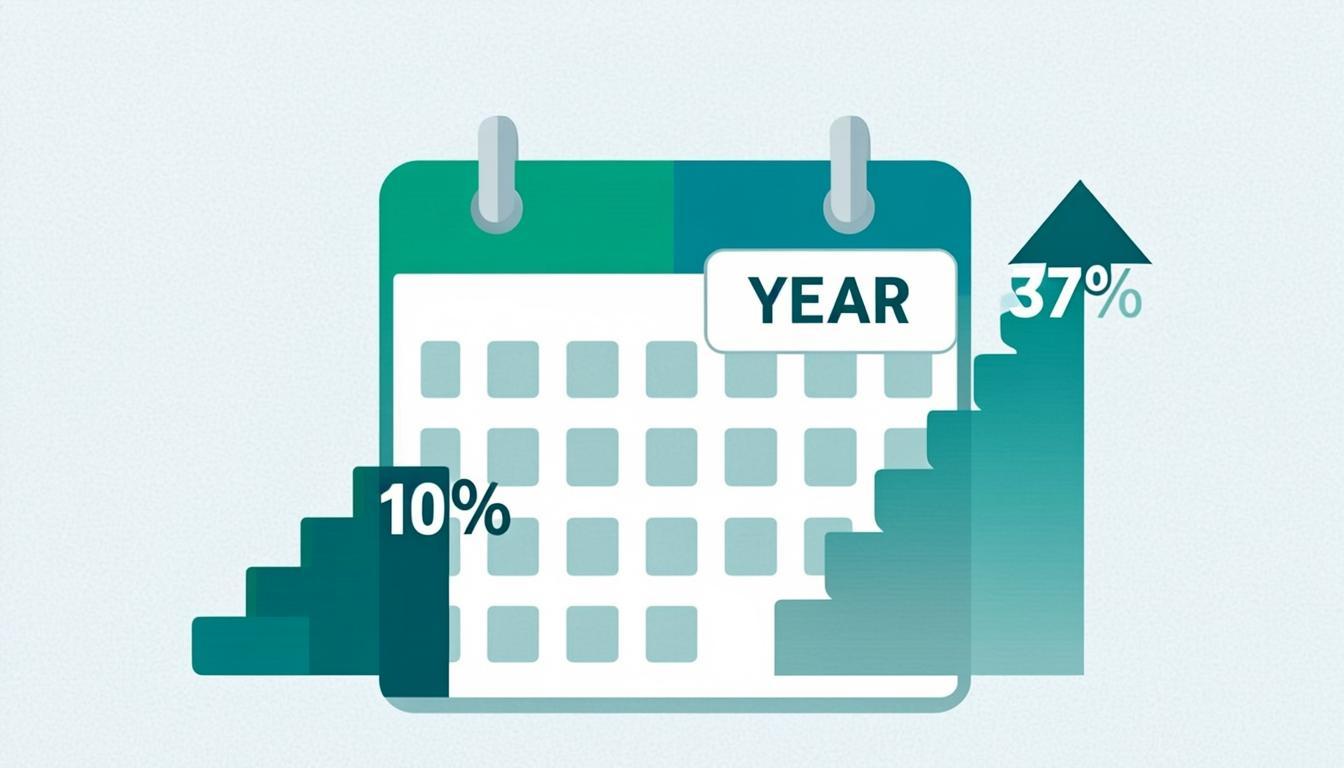
Short-term capital gains tax is the tax you pay on profits from investments you held for less than one year before selling. The IRS treats these gains as ordinary income, meaning they get taxed at the same rates as your salary, wages, and bonuses — not at the lower long-term rates that reward patient investors.
This distinction is not a minor detail. For someone in the top income bracket, a short-term gain gets hit with a 37% federal rate, while the same profit held for just 12 more months would qualify for the 20% long-term rate. That difference alone can cost — or save — you thousands of dollars on a single transaction.
The IRS uses a simple rule to decide which rate applies: the holding period. If you buy an asset on January 15, 2026, and sell it before January 15, 2027, any profit is a short-term gain. If you sell on January 15, 2027 or later, it becomes a long-term capital gain and qualifies for the reduced rates.
Understanding this timing rule is the single most powerful lever you have over your tax bill. The rest of this guide walks through every detail you need to know.
How the IRS Determines Your Holding Period
The IRS calculates your holding period from the date of acquisition to the date of sale. The acquisition date is the day after you actually purchase the asset — not the day you place the order, but the trade settlement date for stocks and the closing date for real estate.
For most stock trades, settlement happens within one to two business days. If you buy shares on Monday, January 13, your acquisition date is Tuesday, January 14. To qualify for long-term treatment, you must sell on or after January 14, 2027 — exactly one year after your acquisition date.
There are special rules that can complicate this calculation:
- Inherited assets always get long-term treatment, regardless of how long you hold them after receiving them. The IRS considers the holding period to start on the date of the decedent's death — you can read more about this in our guide on capital gains tax on inherited property.
- Gifted assets carry over the donor's holding period. If your parent gives you stocks they held for eight months, your holding period starts from when your parent bought them — not when you received the gift.
- Stock splits and dividends reinvested do not reset the holding period. Each new share from a split carries the same acquisition date as the original shares.
- Wash sale adjustments can add days to your holding period. If you sell a stock at a loss and buy the same or substantially identical stock within 30 days before or after, the IRS disallows the loss and adds the disallowed holding period to your new position. Our wash sale rule guide covers this in full detail.
These nuances matter because a holding period that falls even one day short of one year means the entire gain is taxed at ordinary rates. Missing the long-term window by a single trading day can cost you 17 percentage points in extra tax.

Short-Term Capital Gains Tax Rates for 2026
Short-term capital gains are taxed at the same seven brackets as ordinary income. For the 2026 tax year, these brackets are projected as follows:
| Filing Status | 10% Bracket | 12% Bracket | 22% Bracket | 24% Bracket | 32% Bracket | 35% Bracket | 37% Bracket |
|---|---|---|---|---|---|---|---|
| Single | $0 – $11,600 | $11,601 – $47,150 | $47,151 – $100,525 | $100,526 – $191,950 | $191,951 – $243,725 | $243,726 – $609,350 | $609,351+ |
| Married Filing Jointly | $0 – $23,200 | $23,201 – $94,300 | $94,301 – $201,050 | $201,051 – $383,900 | $383,901 – $487,450 | $487,451 – $731,200 | $731,201+ |
These brackets apply to your total ordinary income — including wages, interest income, and short-term gains — not just the short-term gains alone. A short-term gain pushes you into a higher bracket, which means the gain itself may span multiple rate tiers.
For example, if you are single with $80,000 in wages and you realize a $30,000 short-term gain from selling stock, your total ordinary income becomes $110,000. The gain fills up the remaining space in the 22% bracket and then spills into the 24% bracket — so portions of that single gain get taxed at two different rates.
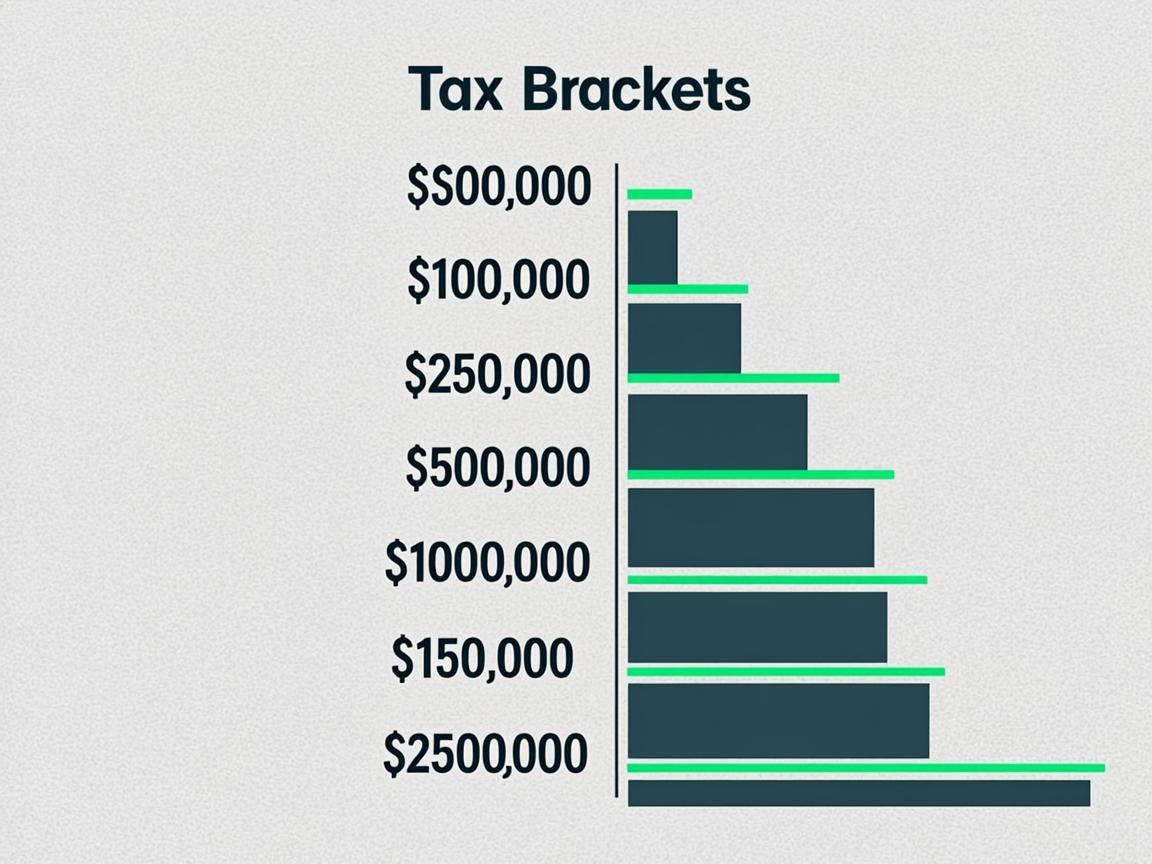
This stacking effect is what makes short-term gains so punishing for high earners. Unlike long-term gains which have their own separate bracket structure capped at 20%, short-term gains ride on top of your existing income and can easily push you into the 32%, 35%, or even 37% tier.
Short-Term vs Long-Term: The Real Cost Difference
To see the impact clearly, consider a single investor with $95,000 in wages who sells stock for a $50,000 profit:
If sold as a short-term gain (held less than one year):
- Total ordinary income: $95,000 + $50,000 = $145,000
- The $50,000 gain fills the 22% bracket ($5,525) and the 24% bracket ($44,475)
- Federal tax on the gain alone: approximately $11,735
- Effective rate on the gain: 23.5%
If sold as a long-term gain (held more than one year):
- Total ordinary income remains $95,000
- The $50,000 gain sits in the 15% long-term bracket
- Federal tax on the gain: approximately $7,500
- Effective rate on the gain: 15%
The difference: $4,235 in extra tax just because you sold a few weeks too early. For larger gains or higher-income taxpayers, the savings from waiting can reach tens of thousands of dollars.
Our detailed comparison guide on short-term vs long-term capital gains tax walks through more examples with different income levels and filing statuses so you can see exactly how the numbers work for your situation.
How to Calculate Short-Term Capital Gains Tax Step by Step
Calculating your short-term capital gains tax follows the same process as any capital gains calculation, but the rate determination is different. Here is the step-by-step method:
Step 1: Determine Your Cost Basis
Your cost basis is what you paid for the asset plus any commissions or fees. If you bought 100 shares of stock at $50 per share with a $10 commission, your total cost basis is $5,010. For mutual funds, you may need to choose a cost basis method — average cost, FIFO, or specific identification — which affects your gain calculation.
Step 2: Subtract Cost Basis from Sale Price
If you sell those 100 shares at $80 each with a $10 commission, your sale proceeds are $7,990. Your gain is $7,990 minus $5,010, which equals $2,980.
Step 3: Confirm the Holding Period
Check the acquisition date and sale date. If the holding period is less than one year, the $2,980 gain is a short-term capital gain taxed at ordinary income rates.
Step 4: Add the Gain to Your Other Ordinary Income
Your short-term gain gets added to your wages, interest, and other ordinary income. The total determines which tax brackets the gain falls into.
Step 5: Apply the Ordinary Income Tax Brackets
Calculate your tax using the seven-bracket ordinary income rate structure. The gain may span multiple brackets depending on your total income.
For a complete walkthrough with real numbers across different scenarios, see our guide on h[how to calculate capital gains tax.
Common Situations That Trigger Short-Term Gains
Short-term capital gains show up in more places than most people realize. Here are the most common triggers:
Stock Trading and Day Trading
Active stock traders generate short-term gains by default. If you buy and sell shares within days, weeks, or months, every profitable trade is a short-term gain taxed at your full ordinary income rate. Day traders face the highest tax burden because nearly all their profits fall into this category.
The math is stark: a day trader in the 37% bracket keeps only 63 cents of every dollar of profit after federal taxes, before state taxes and the net investment income tax take additional bites.
Cryptocurrency Sales
Crypto transactions are treated as property by the IRS, and short-term gains apply to coins held less than one year. Every swap, sale, or conversion of crypto within that window generates a taxable event. Our cryptocurrency capital gains guide explains how to track these transactions and report them correctly.
Stock Options and RSU Sales
When you exercise stock options or sell RSU shares within a short window after vesting, the gains can be short-term. The rules vary depending on whether you have ISOs, NSOs, or ESPP shares — our stock options and RSU guide breaks down each type with specific holding period requirements.
Mutual Fund and ETF Distributions
Even if you hold a mutual fund for years, the fund itself may distribute short-term capital gains to you from its internal trading activity. These distributions are always taxed as ordinary income regardless of how long you held the fund shares. See our mutual fund and ETF tax guide for details.
Real Estate Quick Flips
Investors who buy and sell properties within one year generate short-term gains on the profits. This is common in house flipping, where the entire business model revolves around fast turnaround times. If you are holding investment property, our guide on real estate investment property tax shows how longer holding periods dramatically reduce your tax burden.
Strategies to Reduce Short-Term Capital Gains Tax
You cannot change the rates — short-term gains will always be taxed as ordinary income. But you can take steps to reduce the total amount of short-term gains you realize and offset them with losses:
Wait to Sell
The simplest and most effective strategy. If your holding period is close to one year, waiting a few extra days or weeks can convert a short-term gain into a long-term gain, dropping your rate from up to 37% to 0%, 15%, or 20%. Always check your acquisition date before placing a sell order.
Offset Gains with Short-Term Losses
Short-term losses offset short-term gains first, then long-term gains, then up to $3,000 of ordinary income. If you have unrealized short-term losses in other positions, selling them in the same tax year as your short-term gains can eliminate or reduce the tax bill. This is the foundation of tax loss harvesting, and it works especially well for short-term gains because the offset happens at the same high ordinary rate.
Use Tax-Advantaged Accounts
Selling investments inside a Roth IRA, Traditional IRA, or 401(k) generates no capital gains tax at all — neither short-term nor long-term. The gains either grow tax-free (Roth) or are taxed as ordinary income when withdrawn (Traditional), but there is no separate capital gains event. If you have active trading strategies, keeping them inside retirement accounts eliminates the short-term rate penalty entirely.
Be Careful with Wash Sales
If you sell a position at a loss to offset short-term gains and then buy the same stock back within 30 days, the IRS disallows the loss under the wash sale rule. The disallowed loss gets added to your new position's cost basis and holding period — which means you lose the offset now and may create another short-term gain later.
Consider Installment Sales for Large Gains
For big short-term gains on real estate or other assets, an installment sale lets you spread the gain across multiple tax years instead of reporting it all at once. This can keep you out of the highest brackets in a single year. Our deferral strategies guide covers this and other approaches.
How to Report Short-Term Capital Gains on Your Tax Return
Short-term gains and losses go on Part I of Form 8949, then flow to Schedule D and finally to Form 1040. Here is the reporting flow:
- Form 8949, Part I: List each short-term transaction with date acquired, date sold, proceeds, cost basis, and gain or loss. Check box A, B, or C depending on whether the basis was reported on your 1099-B.
- Schedule D, Part I: Sum up the short-term totals from Form 8949 and calculate your net short-term gain or loss.
- Schedule D, Part III: Combine net short-term and net long-term results to get your overall capital gain or loss.
- Form 1040, Line 7: The final capital gain amount lands here as part of your total income.
If your net short-term gain exceeds your net long-term loss, the result is taxed as ordinary income. If you have a net capital loss exceeding $3,000, the excess carries forward to future years.
Our step-by-step guide on how to report capital gains on your tax return walks through each form with line-by-line instructions.
The Net Investment Income Tax: An Extra Hit on Top
If your modified adjusted gross income exceeds $200,000 (single) or $250,000 (married filing jointly), your short-term gains also trigger the 3.8% Net Investment Income Tax (NIIT). This surtax applies on top of whatever ordinary income rate you already pay.
For a single taxpayer with $250,000 in total income including $50,000 in short-term gains, the NIIT adds roughly $1,900 in additional tax. Combined with the ordinary income rate, the effective federal rate on that short-term gain could reach 40% or more.
Our NIIT complete guide explains the thresholds, calculation methods, and strategies to reduce this extra burden.
State Tax Adds Even More
Most states tax short-term capital gains as ordinary income at their own rates. California charges up to 13.3%, New York up to 10.9%, and many others add significant costs. A few states — including Alaska, Florida, Nevada, Texas, Washington, and Wyoming — charge no state income tax at all, making them significantly cheaper places to realize short-term gains.
Our state capital gains tax rates guide provides a complete state-by-state comparison so you can see exactly how much your state adds to the federal bill.
Quick Checklist Before You Sell
Before you place any sell order, run through this checklist to make sure you are not paying more tax than necessary:
- Check your holding period: Look up the exact acquisition date and confirm whether you are close to the one-year threshold.
- Calculate your projected gain: Subtract your cost basis from expected sale proceeds.
- Check your current income bracket: Know which ordinary income bracket the gain will fall into.
- Review other positions for losses: Can you sell a losing position in the same tax year to offset the gain?
- Watch for wash sale risk: Make sure you are not buying the same stock within 30 days of selling at a loss.
- Consider state tax impact: Add your state rate to the federal rate to see your true total cost.
- Check NIIT threshold: If your income is near $200,000/$250,000, account for the extra 3.8%.
Taking five minutes to run these numbers before selling can save you thousands. The difference between short-term and long-term treatment is the biggest tax lever most individual investors have — and it is entirely within your control.
Fact-Checked & Reviewed
This article was written by Sarah Mitchell (CPA, MST (Master of Science in Taxation)) and reviewed for accuracy by David Chen (JD, LLM in Taxation (New York University)). Published by Wasim Akram, Founder & Lead Researcher at TaxGainsCalc. All tax rates, thresholds, and rules referenced are based on IRS publications and current tax law as of the date published. Tax laws change frequently — always consult a qualified tax professional for advice specific to your situation.
Certified Public Accountant (CPA)
Sarah Mitchell is a Certified Public Accountant with over 15 years of experience in individual and business taxation. She holds a Master of Science in Taxation from Golden Gate University and specializes in capital gains tax planning, investment tax ...
Tax Attorney & Legal Editor
David Chen is a tax attorney with a Juris Doctor and a Master of Laws in Taxation from New York University School of Law. With over 10 years of legal practice, he specializes in 1031 exchanges, capital gains tax law, and IRS dispute resolution. David...

Founder & Lead Researcher, TaxGainsCalc
Wasim Akram is an independent web publisher and digital entrepreneur based in India. Since 2018, he has been building custom CMS platforms, WordPress plugins, niche websites, and AI-powered digital products with over 8 years of real-world experience....
Disclaimer: This article is for informational purposes only and does not constitute tax, legal, or financial advice. Tax laws and regulations change frequently, and the information presented here may not reflect the most current updates. You should consult with a qualified CPA, tax attorney, or financial advisor before making any tax-related decisions. TaxGainsCalc is not responsible for any actions taken based on the information provided in this article.